Socialtrait Insights
Brand Blues at Christmas: Lessons from the McDonalds Christmas backlash

December 17, 2025 · Vivek Kumar
Topics: Technology
When the backlash to McDonald's Netherlands' Christmas ad hit, we at Socialtrait ran our own synthetic audience of Gen Z and Millennial Dutch parents to see why. The tone read as heavy and artificial, the “generic Americanised” imagery missed local Dutch cues, and the brand's intended role as a holiday sanctuary didn't match what the audience actually expected.
Every brand team knows the unique pressure of a Christmas campaign. Expectations spike, emotional sensitivity rises, and audiences become far less forgiving of work that feels even slightly misjudged. When festive storytelling lands well, it earns long-term affection. When it doesn’t, the reaction tends to be quick, noisy, and difficult to control.
Unfortunately, these moments are no longer rare. In the past year alone, brands as diverse as Cracker Barrel and Jaguar have experienced unexpectedly strong pushback to new creative work and refreshed identities. A harsh reaction to McDonald’s Netherlands’ recent Christmas campaign sits in that same pattern, as a reminder of how exposed modern creative decisions have become.
These risks have always existed. But the environment in which brands develop their creative has changed profoundly. New AI tools make iteration easier and experimentation more accessible. Meanwhile, audiences respond to brand messaging in real time, through social media environments where sentiment can spike and spread rapidly*.*This isn’t a McDonald’s problem, it’s a modern marketing problem.
And it’s worth looking at what this moment teaches us.
Understanding the emotional dynamics behind the reaction
When we saw the public response unfolding to the McDonald’s ad, Socialtrait ran a simulation to explore why the film misfired and how these kinds of risks can be identified before the creative goes live.
To do this, Socialtrait created a synthetic audience, composed of digitally fluent Gen Z and Millennial parents with strong sensitivity to brand tone, cultural nuance, and emotional authenticity. The intention is not to provide a critique of McDonald’s or its agency partners, but rather to explore a question that we’ve been studying for years: how audiences interpret creative work in high-pressure cultural moments.
The synthetic discussion surfaced three themes that feel increasingly important for brands navigating the AI-era creativity:
1. It’s dangerously easy to misread the mood
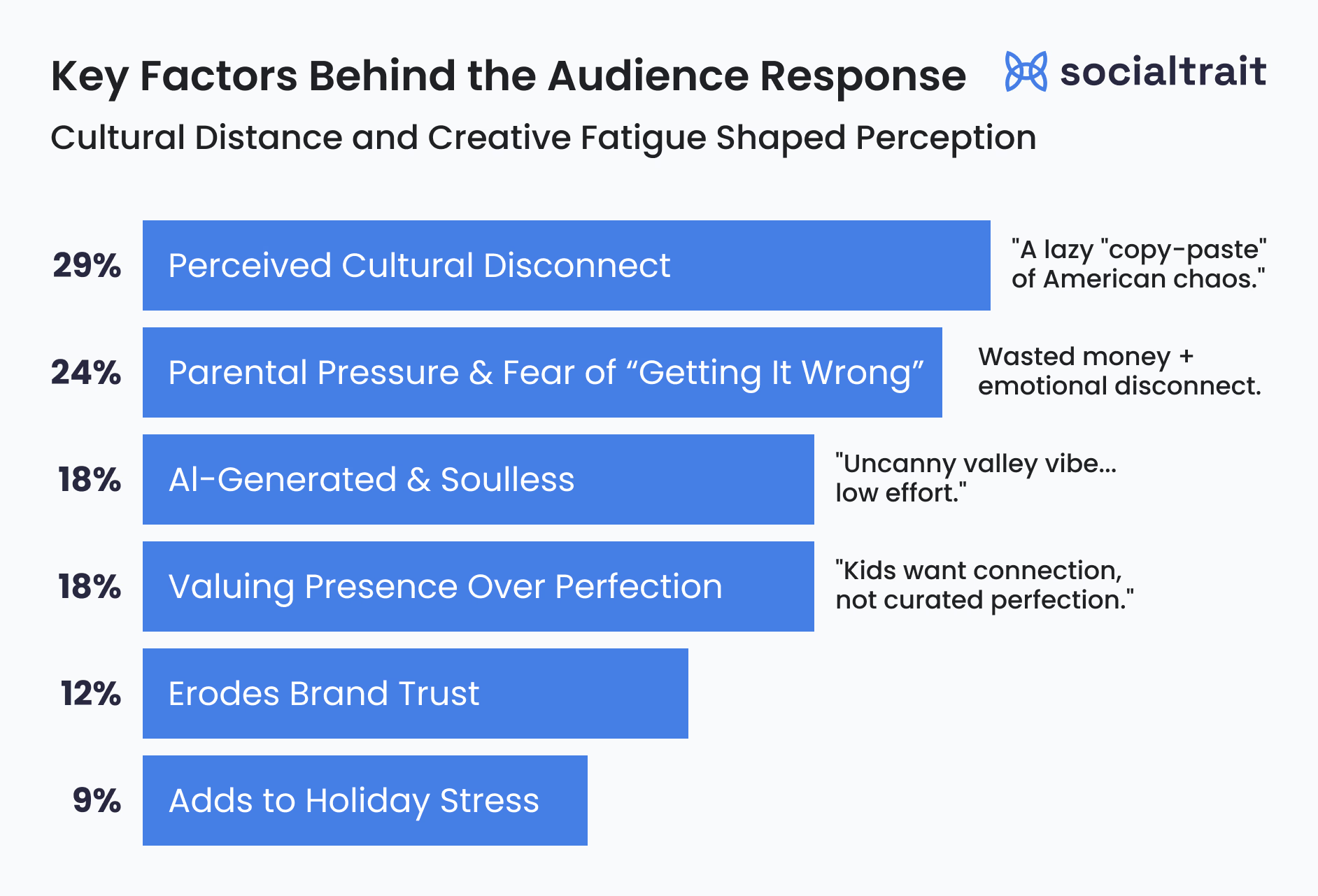
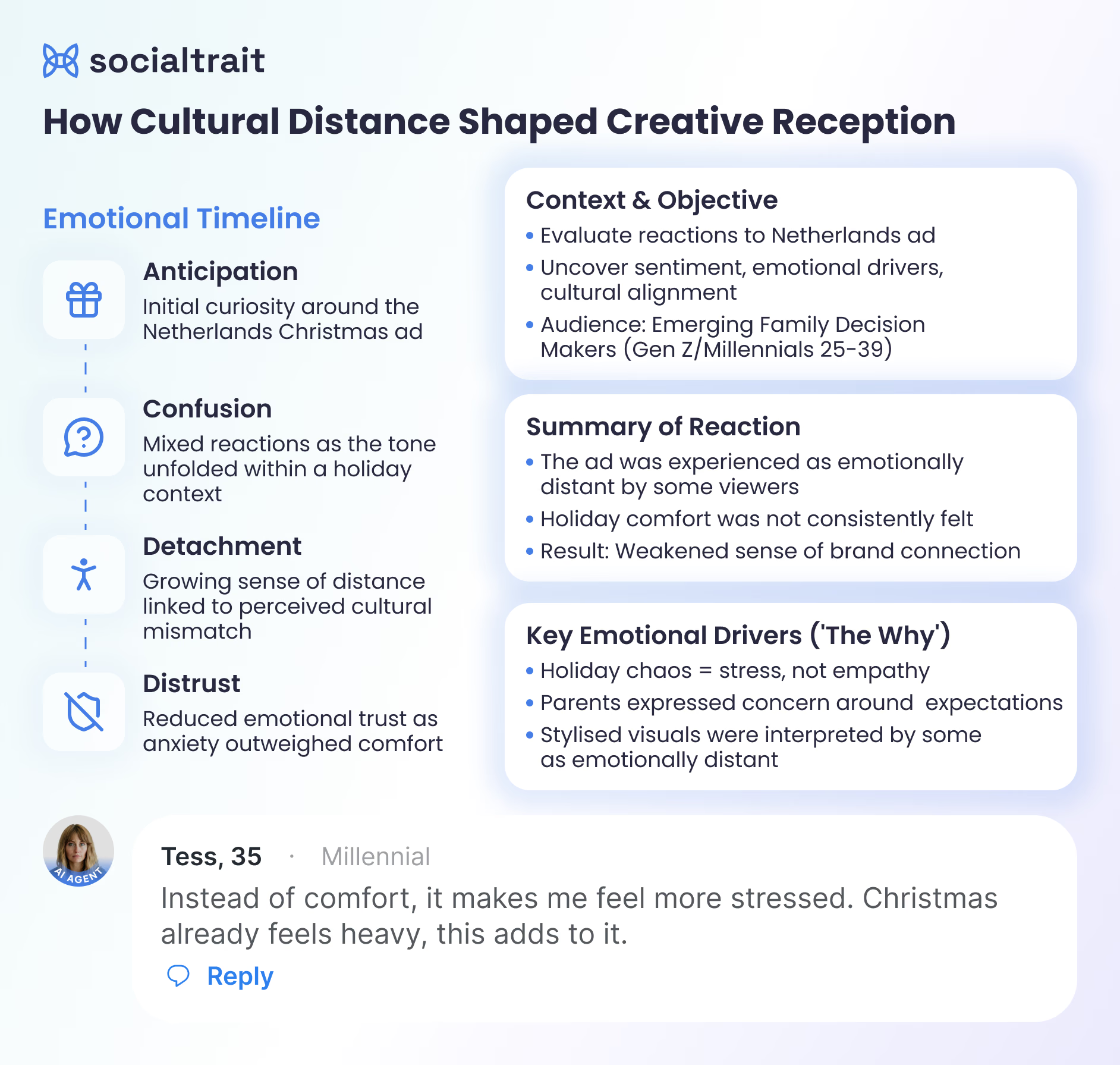
When we tested the advert with a synthetic audience, they described the ad’s tone as “heavy,” “dark,” and “stress-amplifying”. The visuals, while technically competent, carried the fingerprints of generative AI in ways that signalled distance rather than warmth. These negative signals undermine authenticity and made the advert seem cynical to some segments in the audience.
The primary problem wasn’t about aesthetics. It was about trust.
2. Understanding cultural context is non-negotiable
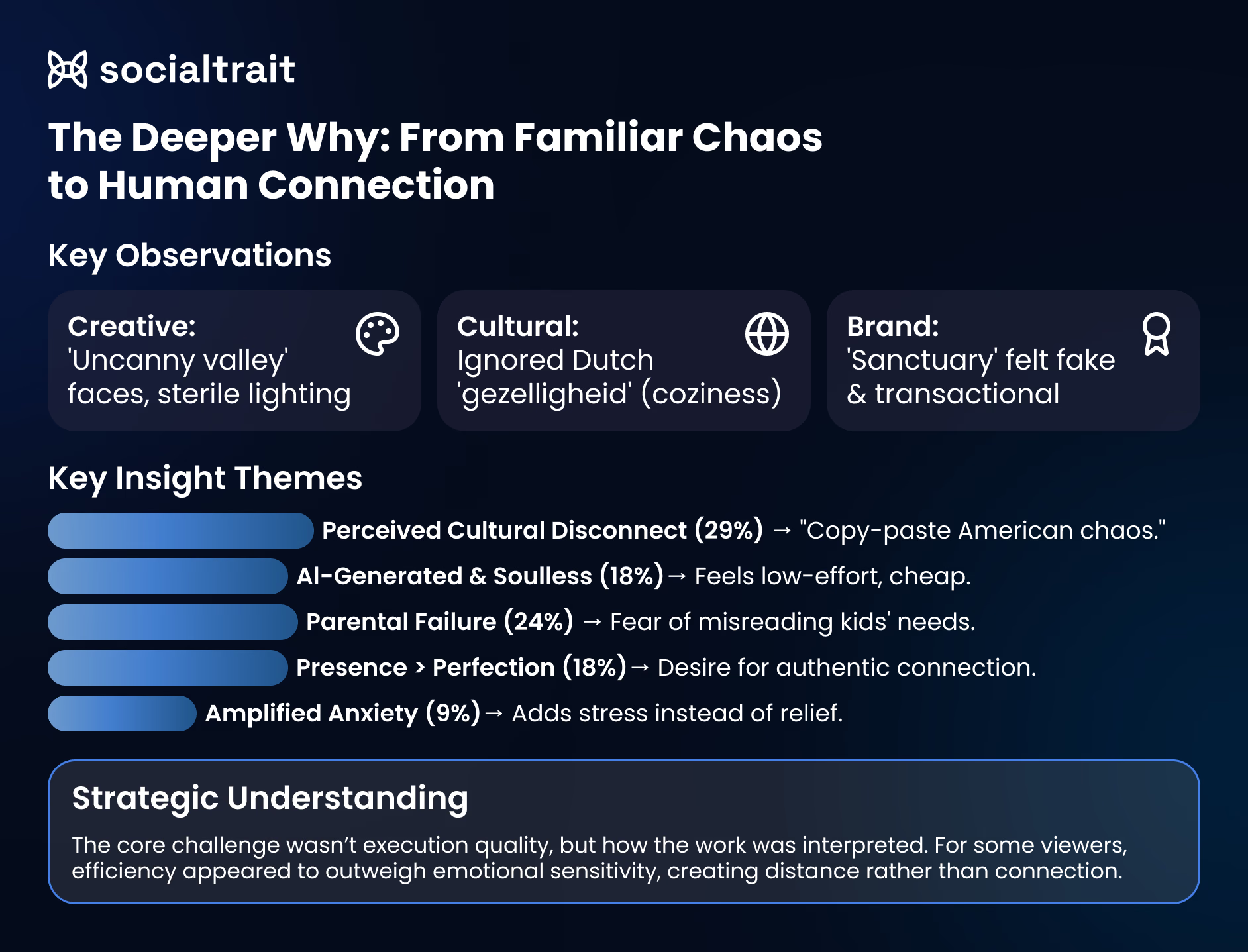
The Dutch-based members of the synthetic community interpreted the film as a “generic Americanised Christmas,” lacking the local nuance that makes holiday storytelling feel grounded. In a season built on shared cultural rituals, the lack of local connection amplified the disconnect.
3. The brand role must align with audience reality
Perhaps the clearest finding was a mismatch between the role the brand hoped to play and what people expected of McDonald’s. The intention seems to have been to present McDonald's as a sanctuary from the stress of the season. But the synthetic community repeatedly included words such as “soulless,” “cheap,” and “trying to be clever instead of human”.
Get closer to your audience
The lesson here is not that AI should be avoided or that experimentation is dangerous. Innovation requires risk, and some of the most iconic campaigns in history began as leaps of faith.
What’s changed is the environment into which those risks are released.
Audiences detect artificiality faster.
Cultural expectations are more specific and less forgiving.
Trust is harder to earn and easier to lose.
Emotional fatigue is shaping how people read visual and narrative cues.
Negative social sentiment can form and amplify in hours.
Brands today don’t just have to get the story right. They have to get the meaning right - the emotional, cultural, contextual layers that determine how the story lands.